
Leadership in Transition: The Rise of the Fractional Executive
Fractional leadership reshapes business strategy and executive culture in Dubai and the Middle East.
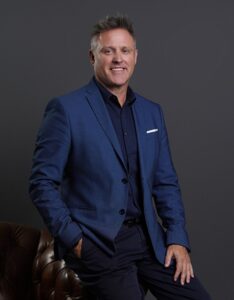
Adam Taylor
Fractional CMO & Marketing Strategist[Published: Nov 15, 2025]
[Reading time: ]
In this article:
Introduction: Leadership Has Left the Office Why Fractional Leadership Is Rising Now The Experience Multiplier Effect From Employment to Engagement The ROI of Agility Fractional Executives as Change Catalysts The Future C-Suite: Hybrid by Design The Human Side of Fractional Leadership My Reflection: Leadership as a Service Takeaways for the Modern CEO Final ThoughtIntroduction: Leadership Has Left the Office
If the last few years have taught us anything, it’s that leadership doesn’t have to live in a corner office. As the pace of business accelerates, the old model of static, full-time leadership is starting to break down — replaced by something far more fluid, flexible, and efficient: the fractional executive. Fractional leaders are seasoned professionals — CMOs, CFOs, COOs, and CTOs — who embed their expertise into organisations part-time or on a project basis. They deliver the strategic impact of a C-suite executive, without the full-time overhead.
It’s not outsourcing. It’s access to experience — on demand. And for many businesses, especially across Dubai and the wider Middle East, this model isn’t just convenient. It’s transformational.
Why Fractional Leadership Is Rising Now
The shift to fractional leadership isn’t a trend — it’s a response to complexity. Markets are faster. Technology cycles are shorter. Growth decisions now require cross-functional expertise that few organisations can afford to keep full-time. In the Middle East, this evolution is being accelerated by several forces:
- Economic diversification: New sectors are emerging faster than traditional ones can adapt.
- Digital acceleration: Businesses need strategic leadership that understands both legacy systems and AI-era marketing, finance, and operations.
- Global mobility: Experienced executives are increasingly choosing portfolio careers — working across multiple brands, regions, and industries simultaneously.
The result? Companies are turning to fractional leaders for precision leadership — targeted expertise that drives outcomes fast.
The Experience Multiplier Effect
What makes fractional executives valuable isn’t just cost — it’s context. Most have operated at senior levels across industries, markets, and business lifecycles. They’ve scaled start-ups, turned around global divisions, launched brands, and built systems that outlast them.
When a company hires a fractional leader, it’s not paying for time. It’s paying for pattern recognition. I’ve seen this repeatedly in my own work as a Fractional CMO. When I join an organisation, I don’t start by learning — I start by diagnosing. Within weeks, I can identify structural gaps, cultural friction, and missed opportunities that would take a new full-time hire months to understand.
Fractional leadership compresses years of experience into weeks of impact. That’s the real ROI.
From Employment to Engagement
The corporate career ladder has been replaced by a leadership lattice. Boards are moving away from fixed appointments and towards a model of strategic engagement — blending permanent roles with fractional and project-based leaders. For businesses, this means access to the right skills at the right moment. For executives, it means freedom — the ability to choose purposeful work over political longevity.
I recently worked with a Dubai-based group managing ten business units across different sectors. Instead of hiring a full-time marketing head for each, they created a “Fractional CMO Network” — shared strategic leadership that scaled across the portfolio.
The outcome: consistency, cost efficiency, and collective intelligence. Leadership didn’t get smaller — it got smarter.
The ROI of Agility
The financial case for fractional leadership is compelling, especially in high-cost executive markets like the UAE.
A full-time CMO, CFO, or COO can cost upwards of AED 600,000–900,000 per year. A fractional executive provides equivalent strategic capability at a fraction of that cost — often 30–40% of the investment, with impact that begins in weeks. But the deeper ROI lies in agility.
Fractional leaders:
- Deliver instant capability without long hiring cycles.
- Create frameworks and systems that remain long after their engagement ends.
- Build internal team capacity through mentorship and process transfer.
In essence, they don’t just lead — they level up the organisation. At IFZA, for instance, we saw how agile leadership models enabled faster marketing decisions and performance scaling across teams. Fractional thinking — flexible, cross-functional, collaborative — isn’t limited to people. It’s a mindset.
Fractional Executives as Change Catalysts
True transformation often fails not because of bad strategy, but because of organisational inertia. Fractional executives succeed because they sit outside traditional structures — allowing them to cut through legacy politics and deliver results objectively. They can lead restructuring, introduce digital transformation, or realign brand positioning without being trapped in internal hierarchies.
That’s why companies are increasingly engaging Fractional CMOs and CFOs to act as change catalysts — embedding expertise, building credibility, and moving on once sustainable systems are in place. Fractional doesn’t mean temporary.
It means transformational.
The Future C-Suite: Hybrid by Design
In 2025 and beyond, the C-suite will no longer be made up solely of full-time executives. It will be hybrid — a combination of permanent leaders, fractional specialists, and project-based advisors. This approach mirrors the evolution of the modern workforce itself — from gig economies to project economies, from employment to engagement ecosystems.
I predict that within five years, 50% of mid-market and enterprise organisations will employ at least one fractional executive role — whether in marketing, finance, or operations. For dynamic economies like the UAE and Saudi Arabia, where transformation is a national agenda, the model aligns perfectly with both ambition and efficiency.
The Human Side of Fractional Leadership
Fractional leadership isn’t just a business model — it’s a lifestyle shift. Many senior professionals are seeking meaning, autonomy, and balance after decades in corporate life. They want to consult, coach, and create, not just manage. I made that transition myself.
After more than 20 years in executive roles — from global retail groups to national free zone authorities — I realised my greatest impact came when helping multiple businesses scale simultaneously. Fractional work gave me the space to apply my experience across industries while mentoring new marketing leaders and helping organisations grow sustainably.
It’s leadership with purpose, not permanence.
My Reflection: Leadership as a Service
The future of leadership isn’t about ownership — it’s about access. Just as software evolved from installation to subscription, leadership is evolving from employment to engagement-as-a-service.
Fractional executives represent the next phase of that evolution — scalable, strategic, and accountable. They give companies the confidence of senior expertise without the rigidity of traditional contracts. In doing so, they make leadership more accessible, adaptable, and measurable than ever before.
For businesses, this means faster results. For executives, it means renewed purpose.
Takeaways for the Modern CEO
- Leadership is shifting from full-time to right-time.
- Fractional executives compress experience into rapid impact.
- The ROI lies in agility, not just affordability.
- Change management needs external, objective expertise.
- The future C-suite will be hybrid — flexible by design.
Final Thought
Leadership isn’t disappearing. It’s distributing. The best companies of the next decade will be those that know when to own, when to outsource, and when to collaborate. Fractional executives don’t just fill leadership gaps — they redefine what leadership means. In a world that demands both strategy and speed, this is the model that keeps businesses evolving — intelligently, sustainably, and humanly. For more insights on marketing strategy and business growth in Dubai and beyond, visit adamtaylorcmo.com/blog.